The jewelry buyer journey now starts long before a customer enters a store.
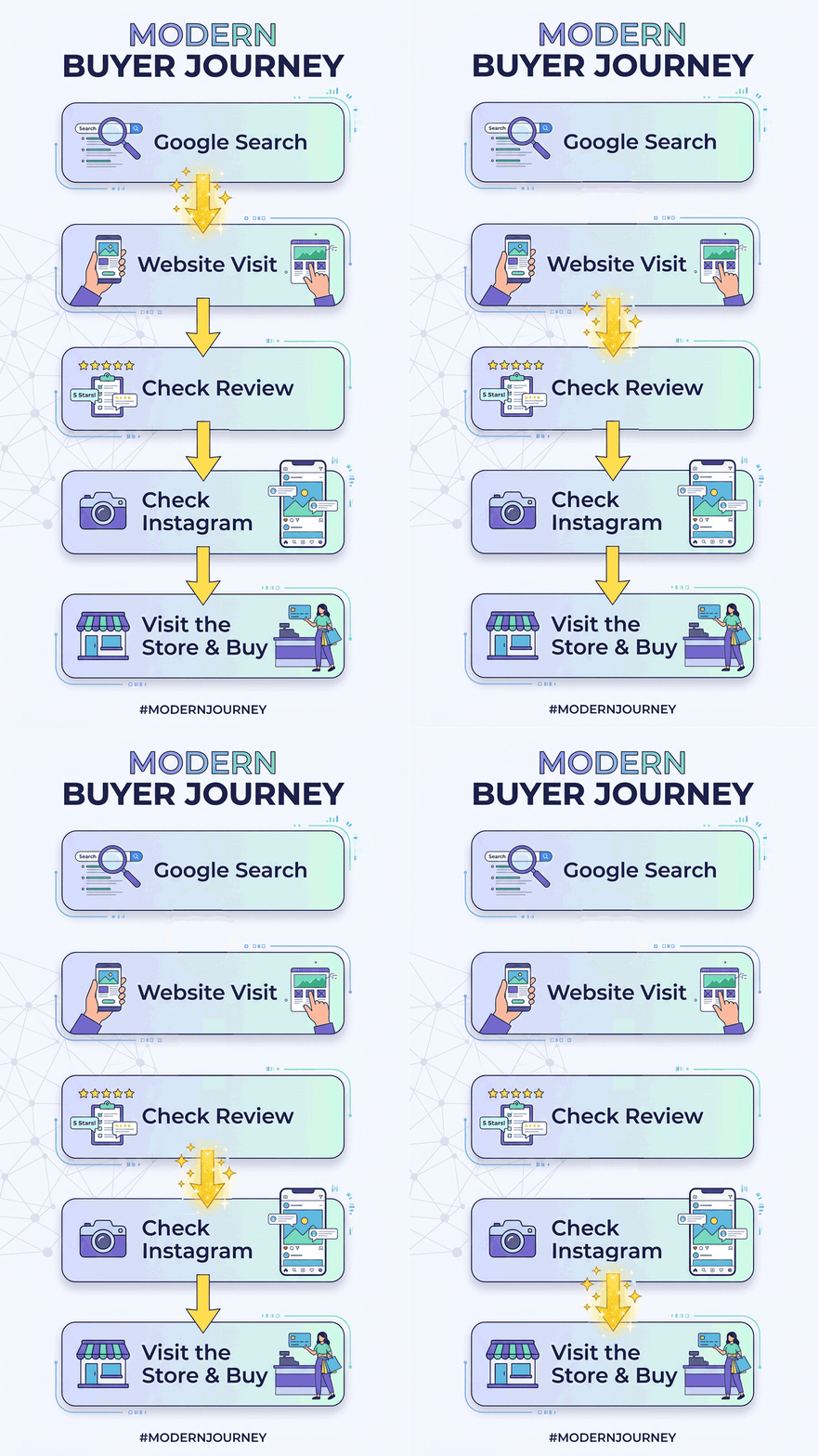
A buyer may find you through a Google search or AI prompt, move to your website, check reviews, open Instagram, and only then decide whether the trip feels worthwhile.
For an independent jeweler, the practical job is not to dominate every channel.
It is to make the path feel current, clear, and connected enough that visiting the store feels like a sensible next step.
From inside the store, that journey is easy to miss.
You see the people who arrive.
You do not see the people who found you, hesitated somewhere along the way, and quietly chose not to come.
Their path is usually simple:
On the website, the questions get more personal.
Can I picture this?
Does this feel right?
Do I trust this store?
Then the buyer keeps clicking.
They skim a few product pages.
They open Instagram and see that the last post is from years ago.
They check reviews and find that the newest one is old too.
Then nothing.
No message.
No complaint.
No visit.
Where did the buyer stop?
To the buyer, the website, reviews, Instagram, and store are not separate departments.
They are different views of the same business.
Inside the store, the team may be sharp. The cases may be merchandised beautifully. The rings may be better in person.
The buyer at home cannot use any of that yet.
They can use only what the next click shows them.
A current product page.
A recent review.
A feed that looks alive.
A next step they can understand.
This is not asking every channel to do the same job.
It is asking whether each one still looks like the same business.
Nothing has to be flashy.
It has to agree.
The product pages should not make one promise while the reviews and social feed suggest another.
That continuity matters because buyers rarely announce which signal changed their minds.
They do not submit a form saying the product pages felt unclear, the reviews looked old, or the Instagram feed made the store feel as if you are no longer in business.
They simply stop.
And that silence can look like weak demand when the real problem may have happened much earlier in the journey.
What does your full path communicate before anyone reaches the door?
Frequently Asked Questions
What is the jewelry buyer journey?
It is the path a customer takes from discovering your store to feeling confident enough to take the next step.
Search, your website, reviews, social media, and the store itself may all play different roles in that journey.
Together, those signals help the buyer decide whether visiting your store feels worthwhile.
What does a broken jewelry buyer journey look like?
Often, it looks like nothing at all.
A buyer can find your store, skim a few product pages, open an inactive Instagram feed, check old reviews, and leave.
There is no abandoned cart.
No complaint.
No explanation.
That's what makes these problems difficult to see from inside the store.
One clue may be a large gap between website traffic and store visits—or an online-to-store conversion rate that seems lower than it should be.
That doesn't tell you where the problem is. It tells you where to start looking.
My merchandise doesn't sell without me, so why does the website matter?
The website doesn't replace the jeweler.
It gets the jeweler into the conversation.
It earns you the opportunity to sell.
A great salesperson cannot help a customer who never walks through the door.
Your digital presence needs to give the buyer enough information and confidence to decide that meeting you—and seeing the jewelry in person—is worth the trip.
Where do 3D and AR fit in the jewelry buyer journey?
They belong where product uncertainty is preventing the buyer from moving forward.
Flat photography can show what a ring looks like.
Interactive 3D can help a buyer inspect the piece from different angles.
Browser-based AR can help answer an even more personal question:
What might this look like on me?
The technology isn't the point.
Reducing uncertainty is.
If interactive 3D or AR helps a buyer move from "I'm not sure" to "I want to see this one in person," then it has done its job.
The OHZONE Perspective
Jewelry buyers are building confidence across a sequence of small decisions.
Google or AI search → Website → Reviews → Instagram → Store Visit
We believe the digital experience should carry that confidence forward until the buyer decides the real thing is worth getting off the couch to see.
That's where interactive 3D and AR can play a role.
Flat photography can show what a ring looks like. Interactive 3D lets a buyer explore the piece from different angles. Browser-based AR helps answer an even more personal question:
What might this look like on me?
The technology isn't the point.
Reducing uncertainty is.
If an interactive experience can move a buyer from "I'm not sure" to "I want to see this one in person," then it has done its job.
That's why OHZONE doesn't approach interactive 3D and AR as technology for technology's sake. We use it to make physical products easier to understand, visualize, and connect with online—so the digital journey leads somewhere real.
We help website visitors pick you before they get off the couch—and give them confidence that the trip will be worth the effort.
Ready to Walk Your Own Buyer Journey?
Start where a new customer starts.
Follow the path through your website, reviews, and social media. Notice where confidence grows—and where it stalls.
If you want a second set of eyes, we can walk the journey with you and identify the questions your digital experience may be leaving unanswered.
